Will AI Educators Replace Traditional Teachers?
Table of Contents
Hey there! What’s up, tech enthusiasts? Today we’re diving into a hot topic that’s been making rounds in both education and tech circles - will AI educators eventually kick human teachers to the curb? Having spent the last year getting my hands dirty with AI tools and systems, I’ve got some thoughts to share.
#
The AI Hype Train
AI technology has come very far in the past few years, from a basic chat generator to now to amazing frontend programming. It’s debatable that they will replace programmers in the near future as from my experience, building full-fledged applications with AI is near impossible right now. They are decent for creative writing but not great - they’re just okay at what they do.

#
The Verdict? Not Anytime Soon
In my opinion from working on and with AI for the past year, the answer is quiet literally and a resounding ’no’.
To be fair, yes an AI could explain a few tasks or small modules to a person in a specialized or easy way, but to completely replace teachers? That’s a farfetched idea.
#
The Context Problem
The problem with AI currently is that it isn’t able to process context properly. But what does “context” even mean in AI terms?
Context in AI refers to the surrounding information that gives meaning to input data. It’s all the background knowledge, previous interactions, and relevant facts that help the AI understand what you’re really asking for. Think of it like trying to understand a conversation that started before you walked into the room - without that earlier context, you’re missing crucial info.
Larger context size makes it difficult for the AI to process it completely. If the context is over-complicated and/or ambiguous, it may lead to the AI hallucinating and providing wrong explanations.
With context and input data, contextual awareness is also needed. A teacher knows and understands a child/student deeply. Even trying to feed this information to the AI will overwhelm it.
#
Could RAG Save the Day?
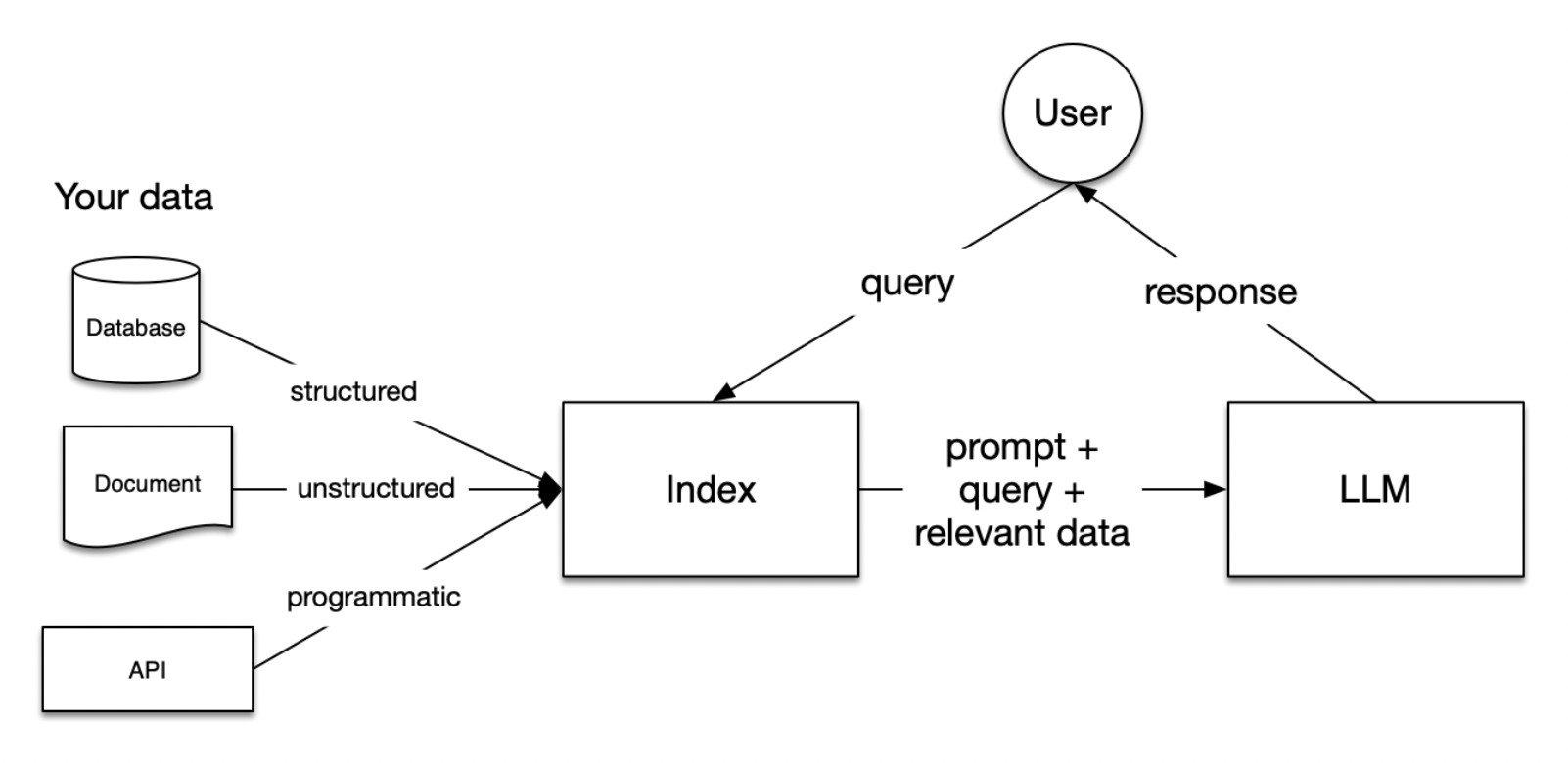
There is an argument to be made that we could use RAG, but what’s that all about?
Retrieval Augmented Generation (RAG) is basically AI with a supercharged memory. Instead of just relying on what it learned during training, RAG can search through and pull information from external databases in real-time to supplement its knowledge. Kind of like if you could instantly Google something mid-conversation without breaking your flow. This helps AI systems provide more accurate, up-to-date information without needing constant retraining.
#
The Economics Don’t Add Up: A Deeper Look at AI Inference Costs
The financial aspect of AI education is where things really fall apart. Let’s break down the inference costs in detail, because this is the killer for AI education at scale.
##
What Are Tokens and Why Do They Matter?
In AI language models, text is processed as “tokens” - chunks of text that the AI treats as single units. A token can be as short as a single character or as long as a full word. On average, 1 token equals about 4 characters or 0.75 words in English.
So a typical page of text (about 500 words) might be around 650-700 tokens. Now imagine a full lesson or textbook chapter - we’re talking thousands or tens of thousands of tokens.

##
The Real Cost of AI Thinking
Every interaction with an AI teacher involves two types of token costs:
- Input tokens: The text sent to the AI (questions, context, instructions)
- Output tokens: The text generated by the AI (explanations, feedback, answers)
Here’s where it gets expensive:
For a high-quality AI model like GPT-4 or Claude, you’re looking at costs around:
- $10-20 per million tokens for input
- $30-60 per million tokens for output
Let’s do some quick math:
If a student has a 45-minute tutoring session with an AI, they might exchange about 10,000 tokens (roughly 7,500 words). That’s about $0.10-0.30 per session at current rates.
Doesn’t sound too bad, right? But scale that up:
- 30 students in a classroom
- 5 days a week
- 36 weeks in a school year
That’s potentially $540-1,620 per class for just one subject. Multiply that by multiple subjects and you’re looking at thousands per student per year just in AI processing costs.
Traditional textbooks and human teachers suddenly look like a bargain!

##
Real-time Interaction Makes It Worse
The killer feature of a good teacher is real-time interaction - answering questions, providing clarification, offering encouragement. For AI to match this, it would need to be constantly “on,” processing inputs and generating outputs.
This isn’t like buying software once and installing it on all computers. Every token processed incurs a cost, every single time. And these costs aren’t likely to drop to negligible levels anytime soon - running advanced AI models requires serious computing power.
Plus, more complex subjects need more specialized models with even higher inference costs. Teaching quantum physics would cost substantially more than basic arithmetic due to the complexity of the knowledge required.
#
In Summary
While AI tools are amazing for supplementing education and providing additional resources, they’re nowhere near replacing the human element that teachers bring to the table. The contextual understanding, emotional intelligence, and adaptability of human teachers remain unmatched by AI.
Plus, the technical limitations around context processing and the potentially prohibitive costs make AI educators a complement to, rather than a replacement for, traditional teaching methods.
So for now, our awesome human teachers can breathe easy - their jobs are safe from the robot takeover!
What do you think? Drop a comment below with your take on AI in education!