The Great AI Divide: Why Closed-Source LLMs Might Be Holding Us Back (And Why Open Weights Rock)
Table of Contents
Alright, let’s talk AI. Or, more specifically, Large Language Models (LLMs). You know, the magic text machines like ChatGPT, Claude, and Gemini that seem to be everywhere these days. For most folks, AI is these hosted chatbots run by the big tech players. But there’s a bit of a hidden battle going on behind the scenes: the fight between closed-source and open-source (or rather, open-weight) models. And honestly? I think the closed-door approach, especially from the big American companies, might be putting the brakes on innovation.
#
The Irony of “Open” AI and the Closed Crew
So, you’ve got giants like Google, Anthropic, and ironically, the company literally named OpenAI, serving up these incredibly powerful LLMs. You chat with them, ask them questions, maybe even use their APIs for cool projects. But here’s the catch: the inner workings, the actual trained model, are kept under lock and key. It’s a black box. You put your query in, you get an answer out, but you don’t really get to see how the magic happens, let alone tinker with it.
 Image Description: A sturdy, locked vault door, perhaps slightly ajar with light peeking through, symbolizing the inaccessible yet intriguing nature of closed-source AI models.
#
Enter the Open Weights Revolution
Then you have companies like Meta. They shook things up with their Llama models. Instead of just offering a chat service, they did something different: they released open weights.
Hold up, what are “open weights”?
Think of an LLM like a super-complex brain trained on tons of data. The “weights” are essentially the learned connections and parameters within that brain – the core intelligence of the model. Releasing open weights means a company gives away this trained brain (or at least a version of it) for others to download, study, and even run themselves.
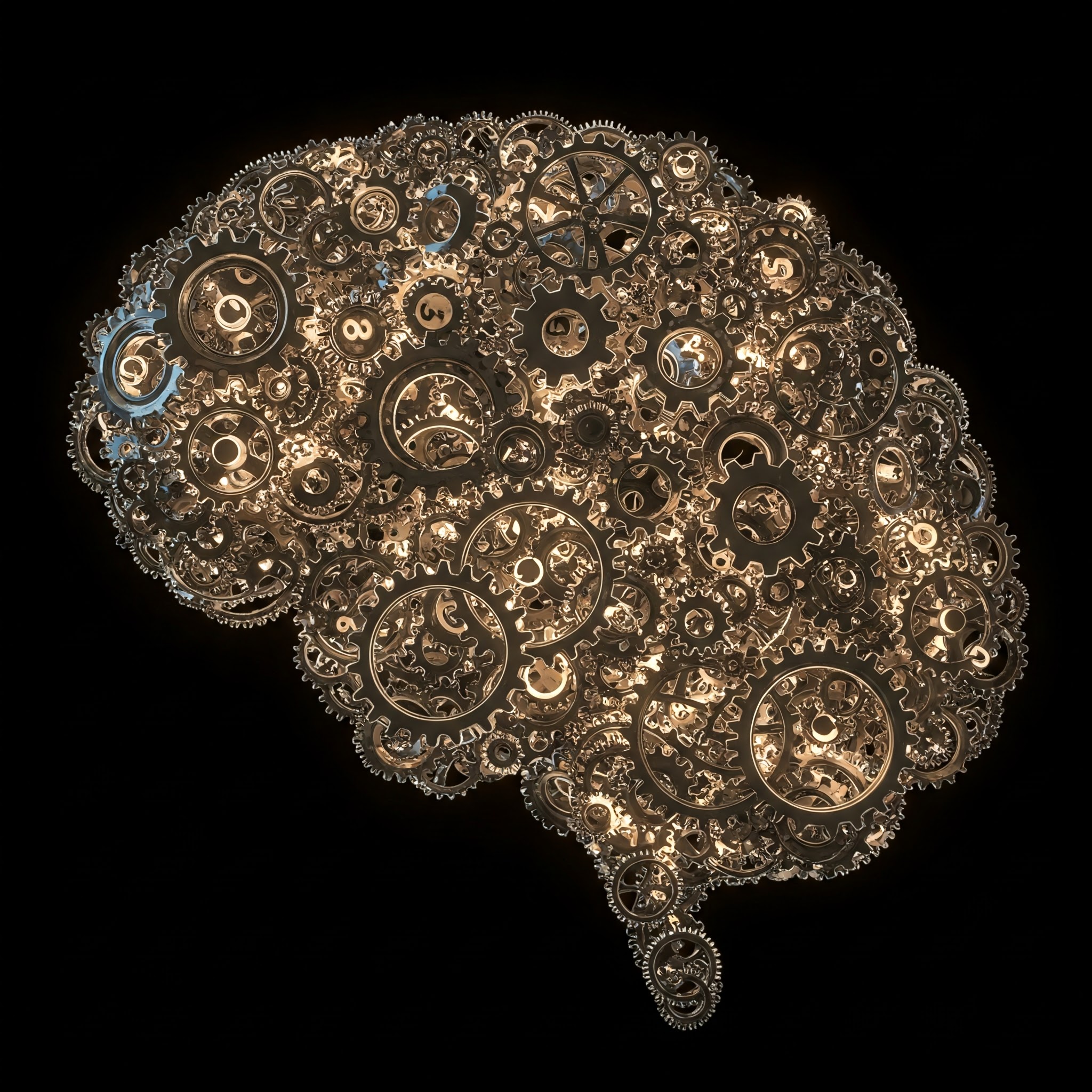 Image Description: Interlocking, glowing gears forming the shape of a human brain, representing the complex, learnable inner workings (weights) of an LLM being shared.
Now, admittedly, running these massive models isn’t trivial. You need some decent hardware. Meta, for example, has commendably made all their Llama models available for download – from smaller, nimble versions up to the popular 70 billion parameter model (Llama 3 70B), and even their massive 405 billion parameter giant. Having access to these is fantastic for the community! However, from a practical standpoint for many developers and researchers, the models up to 70B are often the ones more readily run, fine-tuned, and experimented with on accessible hardware setups. Compared to the very largest, cutting-edge closed-source models operated by companies like OpenAI or Google, even these larger open-weight options might sometimes feel less capable out-of-the-box without specific fine-tuning.
Size does matter in LLMs – we’re talking models ranging from hundreds of millions to trillions of parameters. The open-weight scene is catching up fast, though. The largest publicly available open-weight model we’ve seen is DeepSeek’s absolutely massive 671 billion parameter monster, proving that open doesn’t necessarily mean small or weak anymore. This model is genuinely comparable to offerings from the closed-source crew.
#
Why Openness Matters More Than You Think
So why am I banging the drum for open weights? Because gatekeeping kills innovation, and openness offers so much more:
-
Democratization & Innovation: Open weights let anyone (with the right skills and hardware) get their hands dirty. You can run models locally (more privacy!), study them, and fine-tune them.
- Quick Fine-tuning Recap: Think specialized training for specific tasks – making a general AI brain awesome at medical summaries, coding, etc. Much easier with open weights! This fuels creativity. More eyes, more hands = faster breakthroughs.
-
Choice and Accessibility (Beyond the Creator): This is huge. Open weights mean a model isn’t tied to its original creator’s servers or whims. Worried about DeepSeek being hosted in China and potential data usage? No problem! Since the weights are open, providers like Fireworks AI can host the exact same model on US servers. You get the same performance, often still cheaper than closed alternatives like OpenAI’s o1, but with the data residency and assurance you prefer. Even if running a 671B model locally is a pipe dream for most, having the choice and the possibility is incredibly valuable.
 Image Description: A globe with interconnected nodes spreading across continents, symbolizing how open-weight models can be hosted and accessed anywhere by different providers.
 -
Preservation for the Future: Technology moves fast. Closed-source companies often deprecate older models. Worried they might lose some unique capability or fearing competitors might find an “undiscovered feature,” they simply shut it down. Poof. Gone forever, inaccessible to researchers or historians. Open weights prevent this! Once the weights are out there, the model is preserved. Future researchers can always look back, study its architecture, understand its behavior, or even revive it. It becomes part of the permanent scientific record, not just a forgotten corporate asset.
-
Breaking Down Barriers: Ultimately, open weights lower the barrier to entry, fostering a more diverse and competitive ecosystem, which history shows is almost always better for progress than a closed oligopoly.
#
The DeepSeek Disruption: A Case Study Revisited
The DeepSeek story perfectly illustrates these points. They didn’t just release a massive 671B model; they tackled advanced Reasoning/Thinking techniques often gated behind high paywalls.
Quick RL / “Thinking” Recap: Models reasoning step-by-step for better answers, especially on complex stuff.
Their pricing absolutely demolished the existing structure. OpenAI’s o1: $15/$60 per million tokens (Input/Output). DeepSeek’s launch: ~$0.14-$0.55 / $2.19. Even adjusted, still way cheaper.
 Image Description: A dramatic stock market-style graph showing a huge downward crash, maybe with dollar signs falling, symbolizing the massive market value disruption caused by DeepSeek’s pricing.
The reported $600 Billion market value shockwave wasn’t just about price; it was about possibility. It proved powerful AI didn’t need the closed garden and its high tolls. And thanks to its open-weight nature, its impact wasn’t limited – people could access it via different providers like Fireworks AI, mitigating concerns while reaping the benefits.
DeepSeek also open-sourced tooling and innovated around hardware limitations (sanctions meant less powerful GPUs), proving ingenuity can thrive outside the walled gardens.
#
My Two Cents: Profit vs. Progress
Look, this is just my take, but it often feels like many large American tech companies prioritize profit and market control over genuine, open progress. Building moats, keeping secrets, and deprecating old models without release might be good for short-term shareholder value, but does it lead to the best, most accessible, robust, and preserved AI for everyone? I’m deeply skeptical.
The DeepSeek example, Meta’s Llama releases, and the broader open-weight movement show that competition and openness drive down costs, accelerate innovation, ensure models aren’t lost to time, and empower a wider range of people globally.
Is the closed-source approach all bad? No, valid arguments exist about safety, control, and recouping R&D. But the current imbalance feels restrictive and, frankly, a bit short-sighted.
#
TL;DR Summary: The Gist
- Closed AI: Big players (OpenAI, Google, Anthropic) keep models secret. Powerful but gated.
- Open Weights: Others (Meta, DeepSeek) release model ‘brains’. Anyone can run, study, mod.
- Why Open Rocks: Lowers barriers, enables customization (fine-tuning), spurs innovation.
- Provider Choice: Open models can be hosted anywhere (e.g., DeepSeek via Fireworks AI in the US), addressing data/location concerns.
- Preservation: Open weights ensure models aren’t lost when companies deprecate them; future research is possible. Closed models risk being lost forever.
- DeepSeek Example: Released huge 671B model, used advanced techniques, crushed existing prices ($600B market shock!), proving open can compete and disrupt.
- The Debate: Closed models still strong, but open weights are democratizing AI, ensuring choice, and preserving knowledge. Tension remains between profit-driven secrecy and open progress.
So yeah, while closed models have their place, my vote goes to the open-weight ecosystem for long-term health, innovation, and accessibility. Let’s hope the trend continues.
What are your thoughts? Do the benefits of preservation and provider choice sway you towards open weights? Let me know below!